A radiator that only heats up in patches is one of the easiest heating problems to diagnose, because where the cold patch sits tells you most of what you need to know. Cold at the top usually means trapped air. Cold at the bottom or in the middle usually means sludge. A radiator that stays cold all over is often a valve problem.
This guide walks through each pattern, what you can safely check yourself, and when the fix needs an engineer.
Quick guide: what your cold radiator is telling you
| What you notice | Most likely cause | First step |
|---|---|---|
| Cold at the top, warm at the bottom | Trapped air | Bleed the radiator |
| Warm at the top, cold at the bottom | Sludge settled in the radiator | Flush the radiator or system |
| Cold patch in the middle | Sludge build-up | Flush the radiator or system |
| Whole radiator cold, others fine | Closed valve or stuck thermostatic valve | Check both valves |
| Radiators furthest from the boiler are cooler | System out of balance | Balance the system |
| Every radiator is cold | Boiler, pump, pressure or controls | Check the boiler pressure and settings |
Radiator cold at the top: trapped air
Air collects at the highest point of a radiator, so a cool band across the top with warm metal below is the classic sign. You may also hear gurgling. Bleeding the radiator lets the air out.
How to bleed a radiator
- Turn the heating off and let the radiators cool. Hot water can spray out of the valve.
- Find the bleed valve, a small square fitting at one top corner of the radiator. You will need a radiator key, or a flat screwdriver on some newer valves.
- Hold a cloth under the valve and turn the key anticlockwise about a quarter to half a turn. You should hear air hissing out.
- Close the valve as soon as water appears in a steady flow, rather than spluttering.
- Check the boiler pressure. Bleeding lets a little water out, so the pressure on a combi or system boiler often drops. Top it up if it falls below about 1 bar. Our guide to a boiler losing pressure explains how.
- Turn the heating back on and check that the radiator now heats evenly.
If the same radiator fills with air again within days or weeks, something is letting air into the system or generating gas inside it. A small leak or internal corrosion are common culprits, and both are worth having checked.
Radiator cold at the bottom: sludge
Steel radiators and the water inside them slowly react, producing a black iron oxide sludge, often called magnetite. Because it is heavier than water, it settles along the bottom of the radiator and blocks the flow of hot water through that part of the panel. The result is a radiator that is warm at the top and cold at the bottom.
Other signs that sludge is building up include:
- Black or dark brown water when you bleed a radiator
- Cold patches in the middle of radiators
- Radiators taking much longer to heat up than they used to
- Banging, rumbling or kettling noises from the boiler
- Repeated pump or boiler component failures
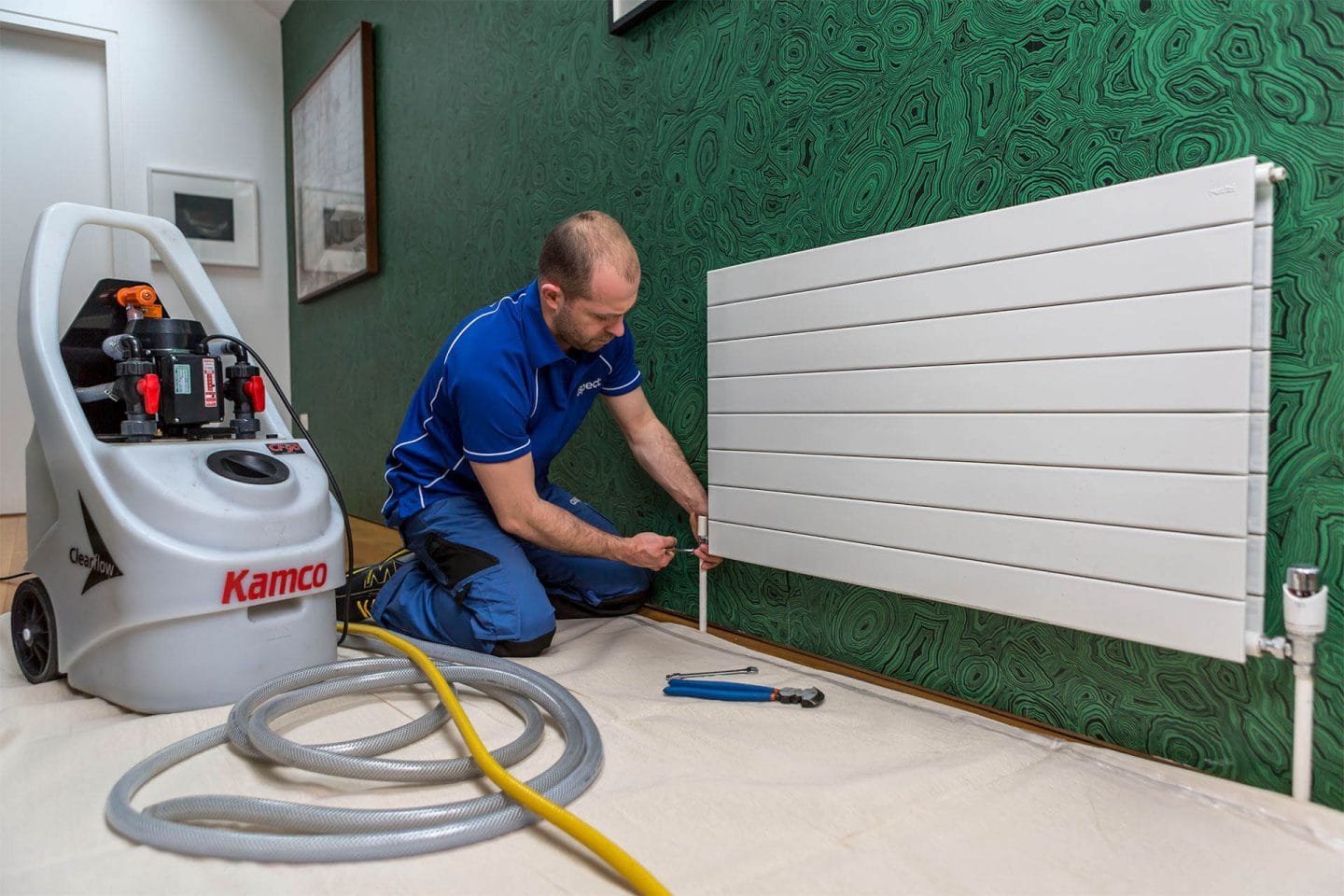
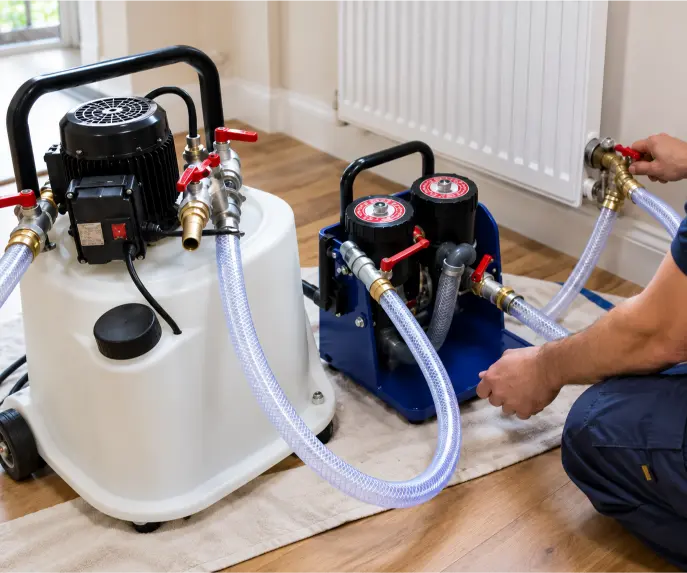
Bleeding will not fix a cold bottom, because there is no air to let out. The sludge has to be removed. If only one radiator is affected, an engineer can take it off the wall and flush it through outside. If several radiators show the same pattern, the sludge is spread around the system and a power flush may be the better option. This pumps water and cleaning chemicals through the whole system at high flow to lift deposits out. Afterwards the system should be refilled with corrosion inhibitor, and many engineers will recommend fitting a magnetic system filter to catch debris in future.
A power flush is not right for every home. On very old or fragile pipework an engineer may suggest a gentler clean, and a radiator that is badly corroded may be better replaced. Our radiator installation service covers like-for-like replacements as well as upgrades.
Cold in the middle
A cold patch in the centre of a radiator usually has the same cause as a cold bottom: sludge restricting circulation. Treat it the same way.
The whole radiator is cold but the others are warm
Before assuming the worst, check both valves at the ends of the radiator.
- The thermostatic radiator valve (TRV), the one with numbers on the head, may be turned down or stuck. Turn it to its highest setting. If it still stays cold, the small pin under the head can stick in the closed position, especially after the summer when the heating has been off.
- The lockshield valve on the other end, usually under a plain plastic cap, may have been closed during decorating or other work.
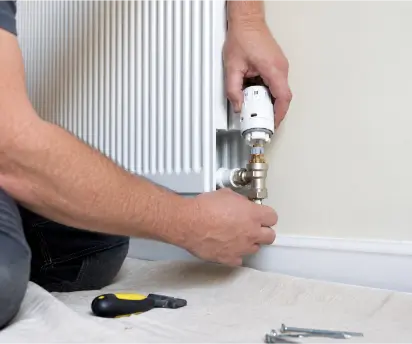
If both valves are open and the radiator is still cold, there may be a blockage in the radiator or its pipework. That needs an engineer to investigate.
Some rooms warm, others cold
If radiators close to the boiler get hot quickly while those furthest away stay lukewarm, the system is probably out of balance. Balancing means adjusting the lockshield valves so that hot water is shared evenly around the house. It takes time and a thermometer to do properly. Where whole floors are cold, a faulty zone valve, pump or control can also be responsible.
If every radiator is cold, the problem is more likely to be the boiler itself. Start by checking the boiler pressure and the timer or thermostat settings. If those are fine, our central heating team can find the fault.
How to keep radiators heating evenly
- Book an annual boiler service. It is a chance to spot early signs of sludge, pressure problems and failing parts. See our guide to how often a boiler should be serviced.
- Keep inhibitor in the system. Water treatment in line with the British Standard for central heating water (BS 7593) slows down corrosion. Inhibitor levels drop if the system is drained or regularly topped up.
- Fix leaks rather than refilling. Constant top-ups add fresh, oxygen-rich water that feeds corrosion.
- Consider a magnetic filter if your system does not already have one.
Help with cold radiators in Milton Keynes
VMV Plumbing & Heating diagnoses and fixes cold radiators across Milton Keynes, Bletchley, Newport Pagnell, Wolverton and nearby towns. Whether the answer is a single radiator flush, a full power flush, rebalancing the system or new radiators, we will explain what we find and the options before any work starts.
Frequently asked questions
Should a radiator be hot all over?
A working radiator should feel evenly warm across its surface. The top is often slightly warmer than the bottom, and the end where hot water enters can be warmer than the far end, but there should be no clearly cold bands or patches.
Will bleeding a radiator fix a cold bottom?
No. Bleeding removes air, which collects at the top. A cold bottom is caused by sludge, which needs flushing out.
Why is my new radiator cold at the bottom?
If a new radiator has been connected to an older system, existing sludge can quickly settle in it. Low flow from an unbalanced system can also leave the bottom of a radiator cooler than expected.
Is a power flush worth it?
It depends on the condition of the system. Where sludge is affecting several radiators or the boiler, a flush can restore circulation. Where only one radiator is affected, removing and flushing that radiator is usually enough.