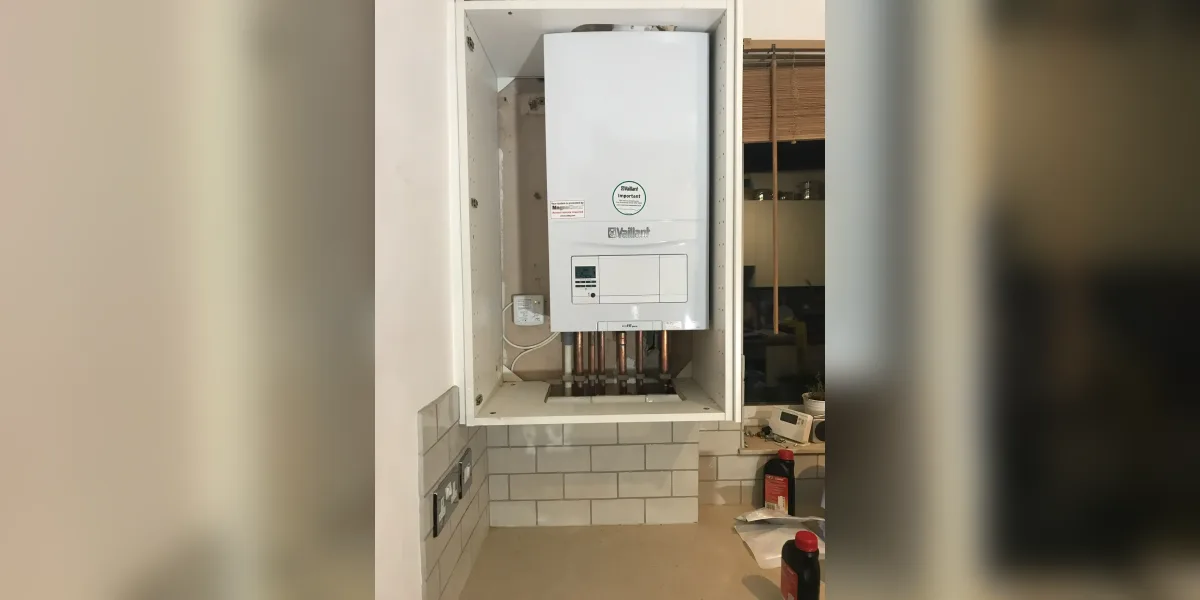
When an old boiler needs replacing, the first real decision is not the brand. It is the type. Most homes have one of three: a combi, a system boiler or a regular (heat only) boiler. Pick the right one and you get steady hot water and sensible running costs. Pick the wrong one and you can end up with a weak shower whenever the kitchen tap runs, or a hot water cylinder you never needed.
This guide explains how each type works, which homes each one suits, what affects the cost, and the checks we make on every survey before we recommend anything.
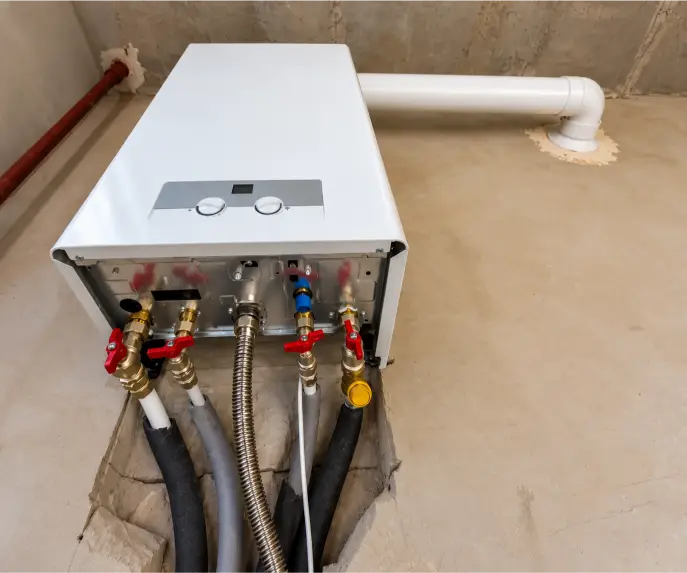
How a combi boiler works
A combination (combi) boiler does two jobs in one box. It heats your radiators, and it heats water instantly as it passes through, straight from the mains. There is no hot water cylinder and usually no tanks in the loft.
Where a combi works well
- Flats and smaller houses with one bathroom.
- Homes where space is tight and you would like the airing cupboard back.
- Households that rarely run two hot taps at the same time.
Where a combi struggles
A combi can only heat so much water at once. If someone runs a bath while another person showers, both flows drop. It also depends entirely on the mains supply coming into your home. If the incoming flow is weak, a bigger combi will not fix it.
How a system boiler works
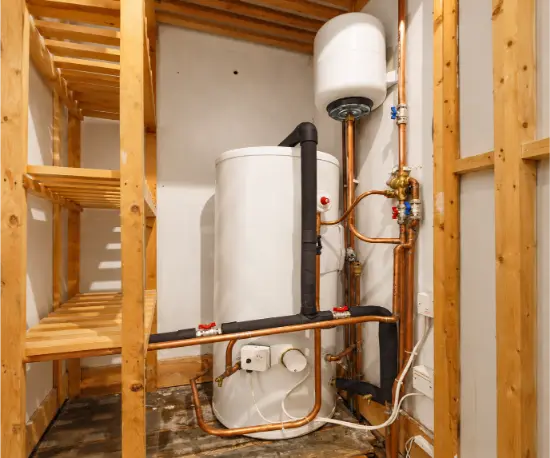
A system boiler heats your radiators and also heats a store of hot water in a cylinder. Most of the parts, such as the pump and expansion vessel, are built into the boiler, so there are no loft tanks. Modern installs usually pair it with an unvented cylinder, which delivers stored hot water at mains pressure. Our guide to unvented vs vented hot water cylinders explains that choice in detail.
Where a system boiler works well
- Homes with two or more bathrooms or an en suite.
- Busy households where showers and baths overlap in the morning.
- Homes planning a future heat pump or solar thermal, since both work with a cylinder.
The trade off
You need room for the cylinder, and stored water can run out if it is used faster than it reheats. Sizing the cylinder properly avoids that. An unvented cylinder also needs an annual check by a qualified installer.
How a regular boiler works
A regular, heat only or conventional boiler is the traditional setup. It heats a hot water cylinder and is fed by a cold water storage tank and a small feed and expansion tank in the loft. It is common in older properties.
A regular boiler is often the sensible choice when you are replacing like for like on an older system, when the mains pressure is low, or when the existing pipework may not cope with the higher pressure of a sealed system. In many homes, though, a survey shows it can be converted to a system or combi setup, which frees up loft space.
Combi vs system vs regular boiler at a glance
| Feature | Combi | System | Regular |
|---|---|---|---|
| Hot water cylinder | No | Yes | Yes |
| Loft tanks | No | No | Yes |
| Best for bathrooms | 1 | 2 or more | 2 or more |
| Several taps at once | Limited | Good | Good |
| Depends on mains flow | Fully | Partly | Less |
| Space needed | Least | Cylinder cupboard | Cylinder and loft |
| Works with solar or a future heat pump | Rarely | Yes | Yes |
What size boiler do you need?
Boiler output is measured in kilowatts (kW). Bigger is not better. An oversized boiler cycles on and off, wastes gas and wears faster. The right size depends on the type:
- Combi boilers are sized mainly on hot water demand, because heating water instantly takes more power than heating radiators.
- System and regular boilers are sized on heat loss, which is how much heat your home loses through walls, windows, floors and the roof on a cold day.
- Cylinders are sized on how many people live in the home and how many bathrooms are used at peak times.
Copying the old boiler’s output is a common mistake. Many older boilers were oversized, and insulation, glazing and extensions change the picture.
Four checks before you choose
These are the same checks we make on a survey before recommending a boiler type.
- Mains flow and pressure. We measure how many litres per minute come into the home. A combi needs a good, steady supply.
- Peak hot water use. How many showers run back to back in the morning? Is there a bath that gets filled often?
- Space. Is there room for a cylinder, and is it worth keeping the airing cupboard?
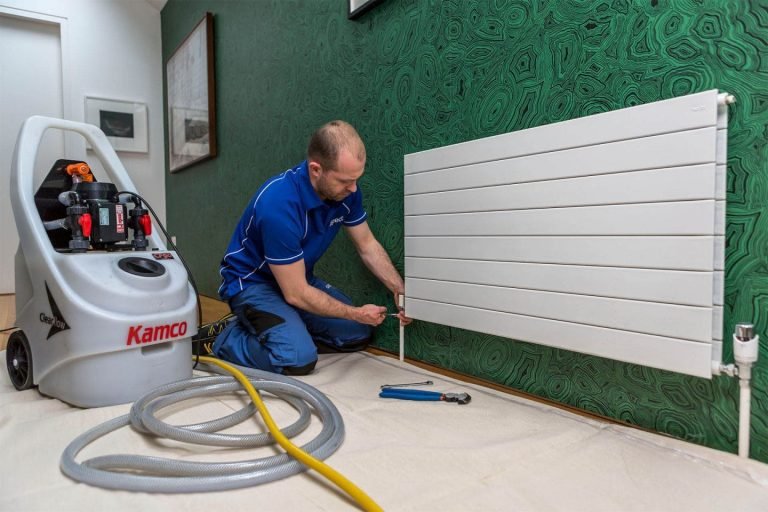
- Existing pipework and radiators. Older open vented systems can carry sludge. Converting to a sealed system may need a power flush and some pipe upgrades first. If some radiators already stay cold at the bottom, our guide to cold radiators explains why.
How much does a new boiler cost?
There is no single price for a new boiler, because no two installations are the same. As a general guide, a like for like swap, such as an old combi for a new combi in the same place, is usually the most affordable option. The price rises when the job involves more work, for example:
- moving the boiler to a new position;
- converting a regular system to a combi or system boiler;
- adding or replacing a hot water cylinder;
- a new flue route, gas pipe upgrade or condensate pipe;
- a power flush, new controls or extra radiators at the same time.
The boiler brand, model and length of warranty also make a difference. Because of all this, we do not publish fixed prices. Viktor, who runs VMV Plumbing & Heating, prices every job himself. Call him on 07902 743538 for a price based on your home, or send us your details and we will call you back.
What the rules say about a new boiler
Any gas boiler installation in England must be carried out by a Gas Safe registered engineer. The installer notifies Building Control through the Gas Safe Register, and you receive a Building Regulations compliance certificate afterwards. Keep it with your house documents, because buyers and solicitors ask for it.
New gas boilers in England must also meet minimum efficiency and control standards. In practice, that means a condensing boiler with suitable time and temperature controls. With a new combi, an extra energy saving measure is also required, such as weather compensation or a smart thermostat with automation and optimisation. Your engineer should explain which controls are being fitted and why.
After fitting, the boiler should be registered for its manufacturer warranty and serviced every year to keep that warranty valid. Our guide to how often a boiler should be serviced covers what a service includes, and boiler losing pressure explains one of the most common reasons people start thinking about a replacement.
How long does a boiler installation take?
A like for like swap is usually done in one day. Moving the boiler, converting a regular system to a combi or adding a new cylinder usually takes two to three days, because pipework, the flue and sometimes the gas supply need changing. We confirm the timescale at the survey so you can plan around it.
New boiler installation with VMV
VMV Plumbing & Heating has been installing boilers since 2013 and is Gas Safe registered (594654). We fit combi, system and regular boilers from Vaillant, Worcester Bosch, Baxi and Main. Every installation starts with a survey and a written quote. On the day, we fit the boiler and controls, flush and test the system, and register the warranty and the Building Regulations notification.
Find out more about our gas boiler installations and central heating services. If you are planning an extension at the same time, read our guide to wet vs electric underfloor heating, which can run from the same boiler.
Frequently asked questions
Is a combi or system boiler more efficient?
Both are condensing boilers with similar efficiency ratings. A combi avoids the heat lost from a stored cylinder. A system boiler can suit a busy home better, because it heats water in bulk rather than firing up for every tap. The best choice depends on how you use hot water.
Can I replace a system boiler with a combi?
Often, yes, if your mains supply is strong enough and your hot water demand is modest. The cylinder and any loft tanks are removed, and the pipework is altered. A survey confirms whether your water supply can keep up.
Can I replace a combi with a system boiler?
Yes. You need space for a cylinder, and new pipework is run to it. This is a common upgrade when a family adds a second bathroom or an en suite.
How many bathrooms can a combi boiler handle?
A combi is best with one bathroom. A larger combi with a strong mains supply can serve a bathroom and a small en suite, as long as both are not used at the same time.
Can you give me a price for a new boiler over the phone?
Yes, in many cases Viktor can give you a guide price on the phone once he knows your current boiler, where it is and what you want. A fixed quote follows a quick survey. Call 07902 743538.